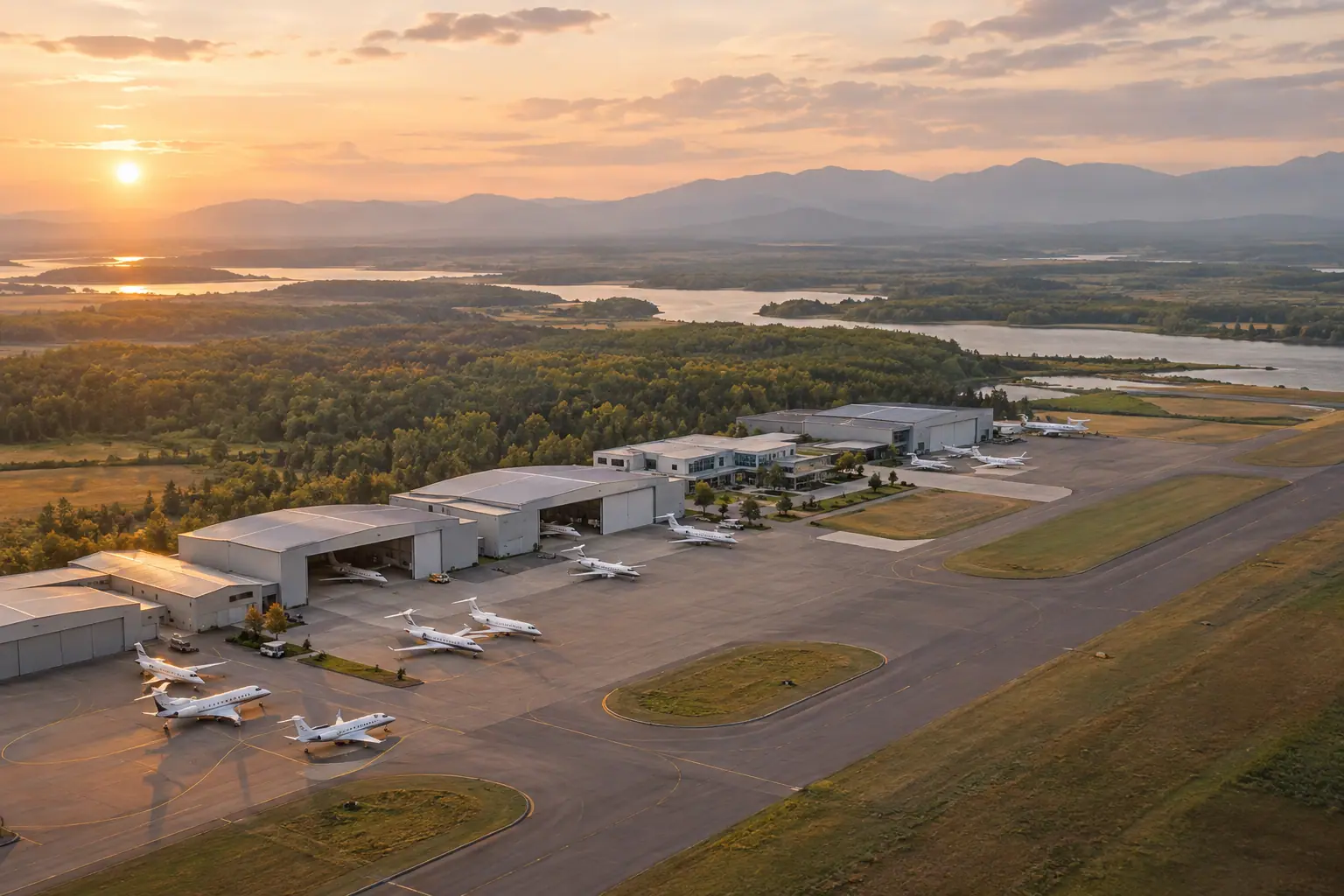
Private jet rental prices Laurence G Hanscom Field
Private jet rental prices Laurence G Hanscom Field depend on aircraft, route and season. KBED sits at 133 feet with a 7,011-foot runway and four FBOs. Quotes are estimates; charter brokers arrange flights with FAA Part 135 operators.
- KBED · BEDIATA codes
- 133 ftairport altitude
- 7,011 ftlongest runway
- 0 mito New York
Private jet rental prices Laurence G Hanscom Field start with the field's 7,011-foot longest runway and 133-foot elevation, which let most midsize and super-midsize jets operate without payload limits. The airport (KBED) is a general aviation reliever west of Boston, and its four FBOs handle charter arrivals and departures. Because Hanscom has no scheduled commercial airline service, your quote covers the full aircraft charter rather than a seat.
Charter prices at Hanscom vary by aircraft category and mission, so request quotes for the exact jet you need. Light jets typically cost less per hour than midsize or heavy jets, and the total depends on flight time, crew duty, landing fees and fuel. Our estimates reflect market ranges, not a single operator's rate. For a precise figure, share your route and passenger count with a broker who can compare available FAA Part 135 operators.
The airport's location near Route 128 and I-95 makes it a practical departure point for Northeast trips. If your destination is within a few hundred miles, a turboprop or light jet can be economical. For transcontinental flights, a midsize or heavy jet is more comfortable and may be necessary for range. The quotes we show are estimates and exclude de-icing in winter, which can add cost on a cold morning.
Hanscom runway length and elevation
Hanscom's 7,011-foot runway and 133-foot elevation accommodate most business jets, including many heavy jets at cooler temperatures. The field has a single main runway (11,011) plus a crosswind runway, so wind direction can affect which one is in use. In summer, density altitude can rise to about 2,400 feet at 115°F, which reduces performance for some aircraft. If you are flying a heavy jet on a hot day, then the operator may limit fuel or payload to stay within runway limits.
| Runway | Size | Width | Surface |
|---|---|---|---|
| 11/29 | 7,011 ft | 150 ft | Asphalt |
| 05/23 | 5,107 ft | 150 ft | Asphalt |
FBOs and ground handling at KBED
Four FBOs serve Hanscom: Jet Aviation Bedford, Atlantic Aviation, Signature Aviation and FlightLevel Aviation. Each provides fueling, hangar space and passenger amenities, and your operator will choose one based on its contract. If your flight departs early, then confirm the FBO's hours, because not all are staffed around the clock. Ground handling and facility fees are usually included in your quote, but ask the broker to itemize them so you can compare offers.
For international arrivals, CBP clearance can be arranged at Hanscom with prior notice. If you are returning from Canada or the Caribbean, then your operator must file the appropriate paperwork and coordinate with the FBO. TSA screening is not required for private charter passengers, but the operator may apply its own security procedures.
Best for
- Business travel to New York, Washington or Chicago from Boston's western suburbs
- Northeast weekend trips where a light jet or turboprop keeps costs down
- International departures to Canada or the Caribbean with CBP clearance at Hanscom
- Travelers comparing multiple FBOs and operators for the best available quote
| Class | Runway required | Here |
|---|---|---|
| Turboprop | 3,300 ft+ | Fits |
| Light jet | 4,000 ft+ | Fits |
| Midsize jet | 5,000 ft+ | Fits |
| Super-midsize jet | 5,200 ft+ | Fits |
| Heavy jet | 5,600 ft+ | Fits |
Weather and density altitude by season
July density altitude at Hanscom averages about 1,800 feet, and the peak at 115°F is roughly 2,400 feet. Those figures matter for takeoff distance and climb performance, especially for turbocharged or heavy jets. In winter, density altitude drops well below sea level, so aircraft perform better and runway margins increase. If you are flying on a hot summer afternoon, then plan for a possible fuel stop or a lighter payload on long routes.
Summer highs reach 84°F in July, while January highs average 37°F. Wet days are spread fairly evenly across the year, with 13 wet days in July and 9 in September and November. If your trip is in winter, then de-icing and possible delays should be part of your budget. Spring and fall often offer the most favorable conditions for light jets.
| Monthly | Avg high | Wet days | Alt. density |
|---|---|---|---|
| Jan | 37°F | 10 | -1,300 ft |
| Feb | 39°F | 11 | -1,200 ft |
| Mar | 46°F | 11 | -700 ft |
| Apr | 56°F | 12 | 0 ft |
| May | 68°F | 10 | 800 ft |
| Jun | 77°F | 12 | 1,400 ft |
| Jul | 84°F | 13 | 1,800 ft |
| Aug | 82°F | 10 | 1,700 ft |
| Sep | 75°F | 9 | 1,200 ft |
| Oct | 63°F | 10 | 400 ft |
| Nov | 51°F | 9 | -400 ft |
| Dec | 41°F | 10 | -1,000 ft |
Access and ground transportation
Hanscom Field is about 20 miles northwest of downtown Boston, near the Route 128 and I-95 corridor. The airport has no scheduled commercial flights, so you will not deal with terminal crowds. If you are driving, then allow extra time during weekday rush hours. Rental cars and ride-share services are available, and the FBOs can arrange ground transportation on request. For a stress-free departure, arrive 15 to 20 minutes before your scheduled time.
Private jet routes via Laurence G Hanscom
Across these 6 private jet routes, distance spans 199 to 2,129 nautical miles; one-way light jet estimates range from $4,000 to $36,000.

Inquiries on this airfield
What are typical private jet rental prices Laurence G Hanscom Field?
Private jet rental prices Laurence G Hanscom Field depend on aircraft, distance and season. A light jet for a short Northeast trip may cost less per hour than a midsize jet for a cross-country flight. Because quotes are estimates, request a specific route and passenger count. A broker can compare FAA Part 135 operators and itemize fees. The airport's 7,011-foot runway supports most jet types, so your quote should reflect the aircraft you choose, not a runway limitation.
How far is Hanscom Field from Boston?
Hanscom Field is about 20 miles northwest of downtown Boston, roughly a 30- to 45-minute drive depending on traffic. The airport sits near Route 128 and I-95, making it convenient for travelers from Boston's western suburbs. If you are heading to a Patriots game or a business meeting along the Route 128 corridor, then Hanscom can save time compared with Logan. Ground transportation can be arranged through your FBO.
Which FBOs operate at Hanscom Field?
Four FBOs serve Hanscom Field: Jet Aviation Bedford, Atlantic Aviation, Signature Aviation and FlightLevel Aviation. Each offers fueling, hangar space and passenger amenities. Your operator will select an FBO based on its contract and your itinerary. If you have a preference, then tell your broker when requesting quotes. Facility fees are typically included, but ask for an itemized breakdown so you can compare offers accurately.
How does density altitude affect flights at Hanscom?
Density altitude at Hanscom averages about 1,800 feet in July and peaks near 2,400 feet at 115°F. Higher density altitude reduces engine performance and increases takeoff distance, which can limit payload or fuel on hot days. If you are flying a heavy jet on a summer afternoon, then the operator may adjust fuel or passenger load. In winter, density altitude often drops below sea level, improving performance and runway margins.
Can I arrange an international charter from Hanscom?
Yes, international charters can depart from and arrive at Hanscom with prior coordination. For arrivals from outside the US, CBP clearance can be arranged at the FBO. Your operator must file the necessary paperwork and ensure the aircraft meets customs requirements. If you are flying to Canada or the Caribbean, then ask your broker about CBP availability and any fees. TSA screening is not required for private charter passengers.
What is the longest runway at Hanscom and what jets can use it?
The longest runway at Hanscom is 7,011 feet, with a field elevation of 133 feet. That length supports most light, midsize and super-midsize jets, and many heavy jets at cooler temperatures. If you are considering a large-cabin aircraft on a hot day, then the operator will check performance to ensure safe takeoff. For transcontinental flights, a midsize or heavy jet is typically more comfortable and may be necessary for range.