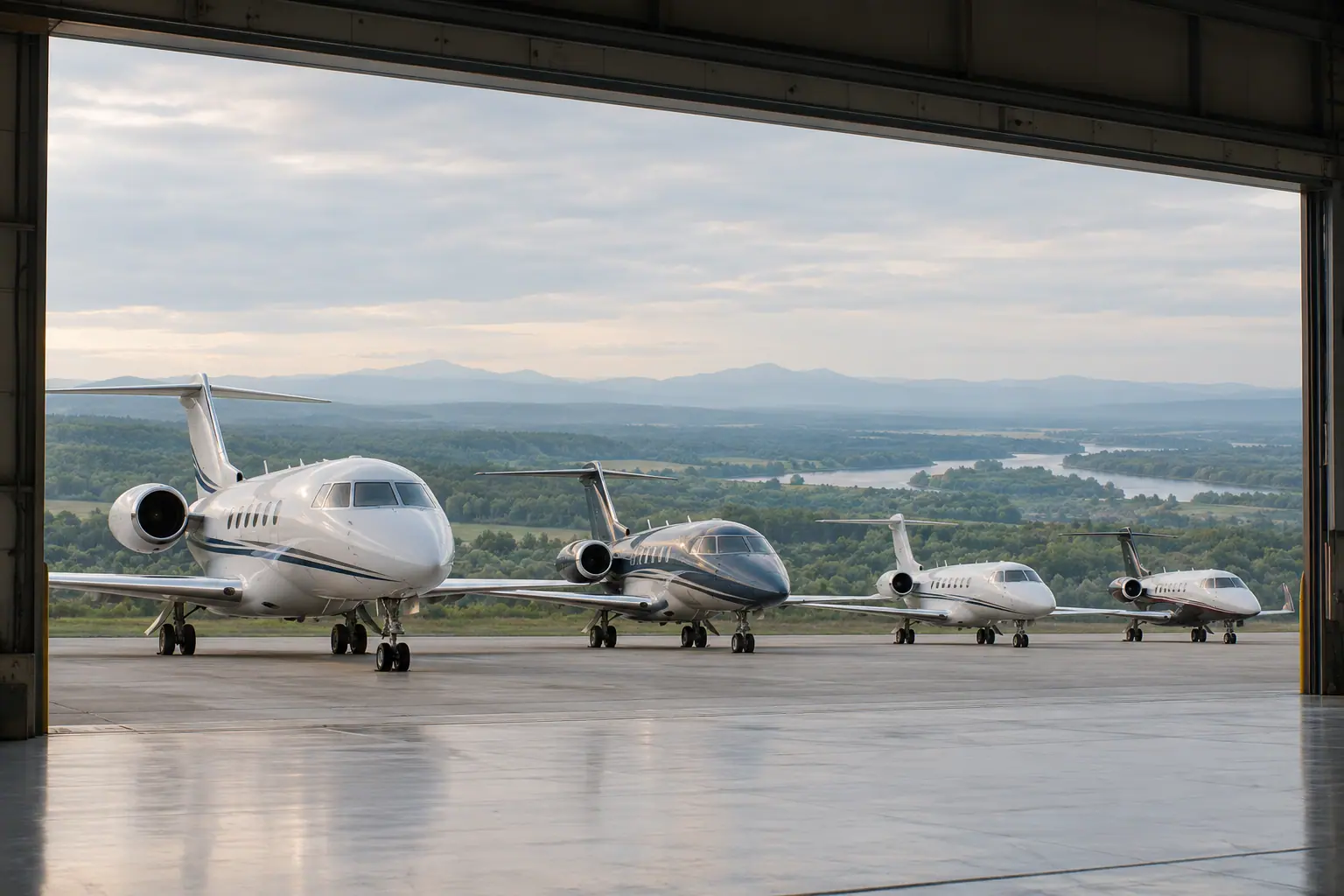
Private jet rental prices by aircraft
Private jet rental prices by aircraft begin at $2,200 per hour for a turboprop. Light jets run $3,800 to $5,800 per hour before taxes and positioning fees. Charter brokers quote these as estimates.
- Home
- Aircraft
Hourly rates are the spine of every quote, and they climb in steps by class. A turboprop sits at $2,200 to $3,500 per hour, a light jet at $3,800 to $5,800, a midsize at $5,200 to $7,800, a super-midsize at $7,200 to $10,000, and a heavy at $9,500 to $14,500. Those bands cover the aircraft itself, crew, and fuel on a standard charter; they do not cover landing fees, overnight crew costs, or the repositioning legs an operator may need to reach your airport.
The class you pick also decides which airports you can use and how long a trip is practical. A light jet with 1,400 nautical miles of range handles New York to Miami in 2 hours 37 minutes, while a heavy jet with 4,000 nautical miles reaches farther and carries up to 14 passengers. Below, each class and a set of specific airframes are priced against real routes so you can see where the money goes before you ask for a quote.

Turboprop
Turboprops are the entry price point, at $2,200 to $3,500 per hour, and they burn less fuel than jets on short legs. Turboprops carry 6 to 8 passengers at about 300 knots over roughly 1,500 nautical miles, which suits regional trips and smaller fields. On a short Dallas to Houston hop the savings are modest; on a 600-mile leg they are real.
Pilatus PC-12 NGX
- 6 seats
- 290 kt cruise
- 1,800 nm range
The Pilatus PC-12 NGX is a single-engine turboprop with 6 seats, 290 knots of cruise, and 1,800 nautical miles of range. Its 40 cubic feet of baggage space is tight for a full load. At turboprop hourly rates, the PC-12 NGX suits regional legs where a jet would be overkill.
Daher TBM 960
- 6 seats
- 330 kt cruise
- 1,730 nm range
The Daher TBM 960 is a fast turboprop, cruising at 330 knots over 1,730 nautical miles with 6 seats. With 32 cubic feet of baggage, the TBM 960 rewards light packers on medium-length trips. It is quicker than most turboprops but still priced in the turboprop band.
Light jet
Light jets are the most common first charter, priced at $3,800 to $5,800 per hour for 4 to 7 passengers. A light jet flies about 430 knots and covers 1,400 nautical miles, so New York to Miami is 2 hours 37 minutes and Los Angeles to Las Vegas is 47 minutes. On many short routes the light jet total lands between $4,000 and $6,000.
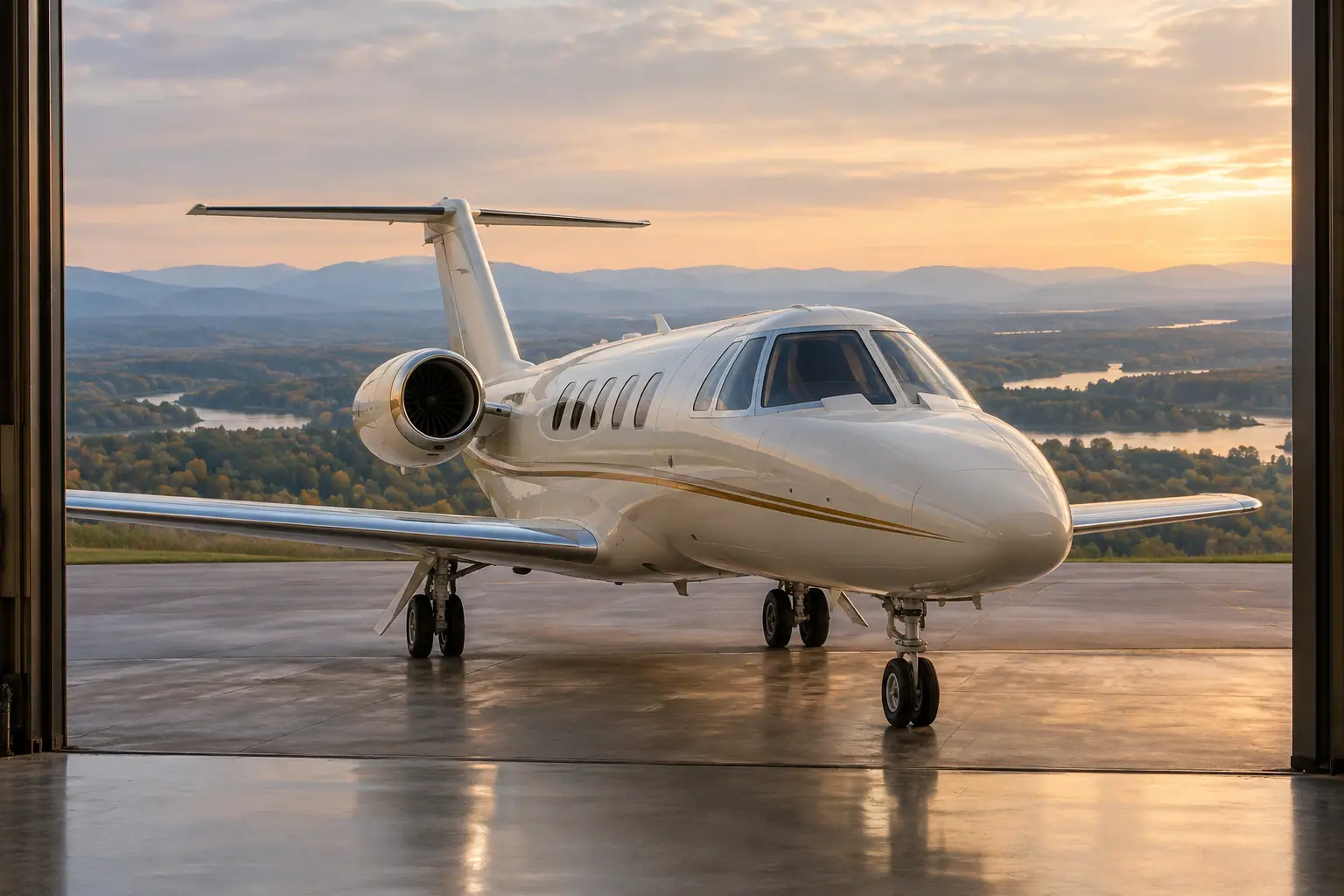
HondaJet Elite II
- 5 seats
- 422 kt cruise
- 1,550 nm range
The HondaJet Elite II is a light jet with 5 seats, 422 knots of cruise, and 1,550 nautical miles of range. Baggage space is 66 cubic feet. For 4 or 5 passengers on short routes, the HondaJet Elite II keeps the light jet rate low.
Cessna Citation CJ4 Gen2
- 7 seats
- 451 kt cruise
- 2,165 nm range
The Cessna Citation CJ4 Gen2 carries 7 passengers at 451 knots with 2,165 nautical miles of range. Its 71 cubic feet of baggage is generous for a light jet. The CJ4 Gen2 can fly New York to Miami nonstop at light jet hourly rates.
Midsize jet
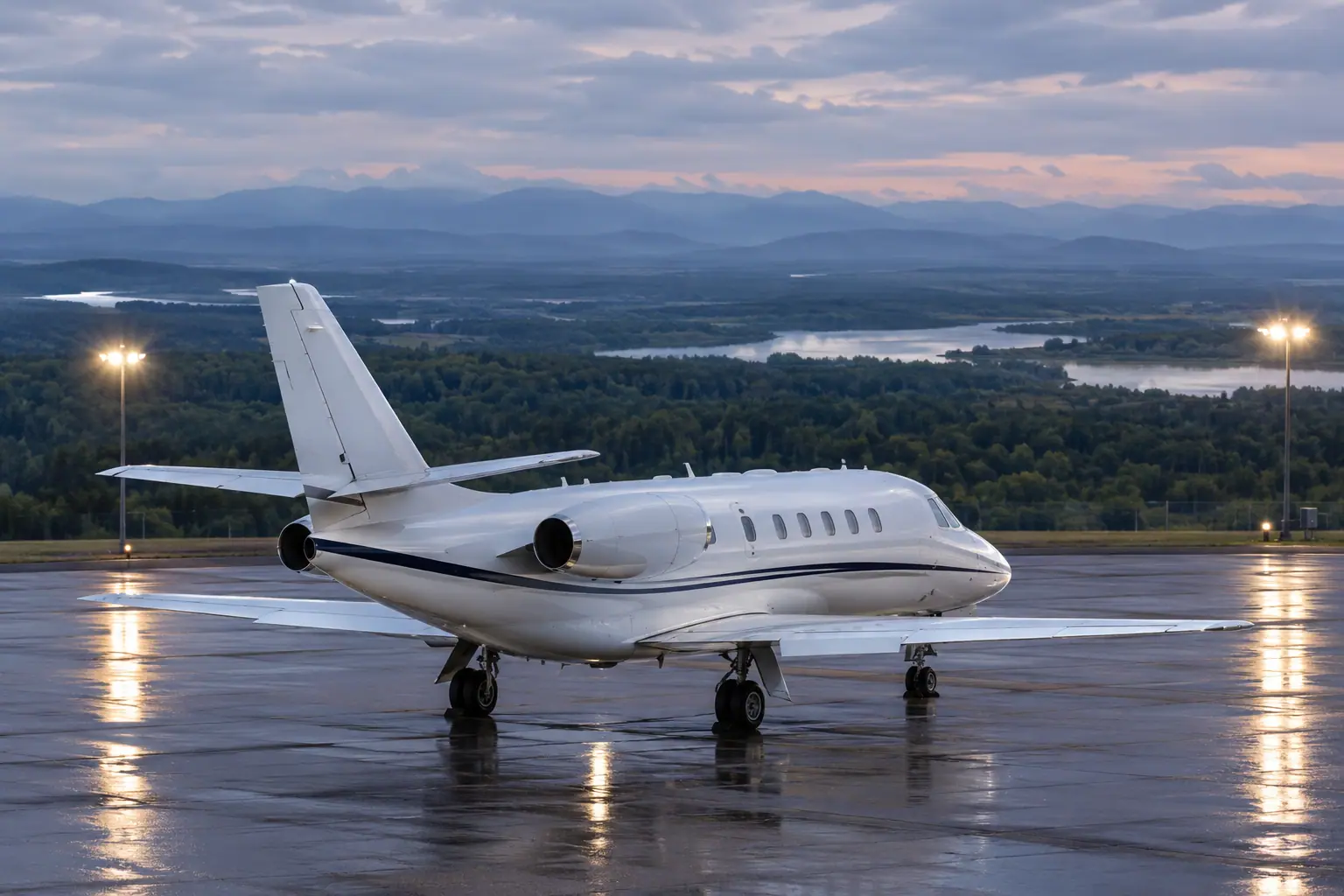
Midsize jets run $5,200 to $7,800 per hour and carry 7 to 9 passengers in a stand-up cabin. A midsize jet reaches roughly 2,100 nautical miles at 440 knots, which covers most domestic legs without a fuel stop. If your party is six or more with luggage, the extra cabin space usually pays for itself in comfort.
Cessna Citation XLS+
- 8 seats
- 441 kt cruise
- 2,100 nm range
The Cessna Citation XLS+ is a midsize jet with 8 seats, 441 knots of cruise, and 2,100 nautical miles of range. The XLS+ adds a stand-up cabin and 90 cubic feet of baggage for midsize pricing. It is a common step up from a light jet for families.
Cessna Citation Latitude
- 9 seats
- 446 kt cruise
- 2,700 nm range
The Cessna Citation Latitude seats 9 at 446 knots with 2,700 nautical miles of range. Its cabin is 6 feet tall and 21 feet 9 inches long, with 127 cubic feet of baggage. The Latitude covers most domestic nonstops at midsize hourly rates.
Super-midsize jet
Super-midsize jets sit at $7,200 to $10,000 per hour and seat 8 to 10. A super-midsize jet covers about 3,200 nautical miles at 470 knots, so coast-to-coast nonstops become routine rather than a stretch. These airframes also handle high-altitude departures better, which matters at places like Centennial near Denver.
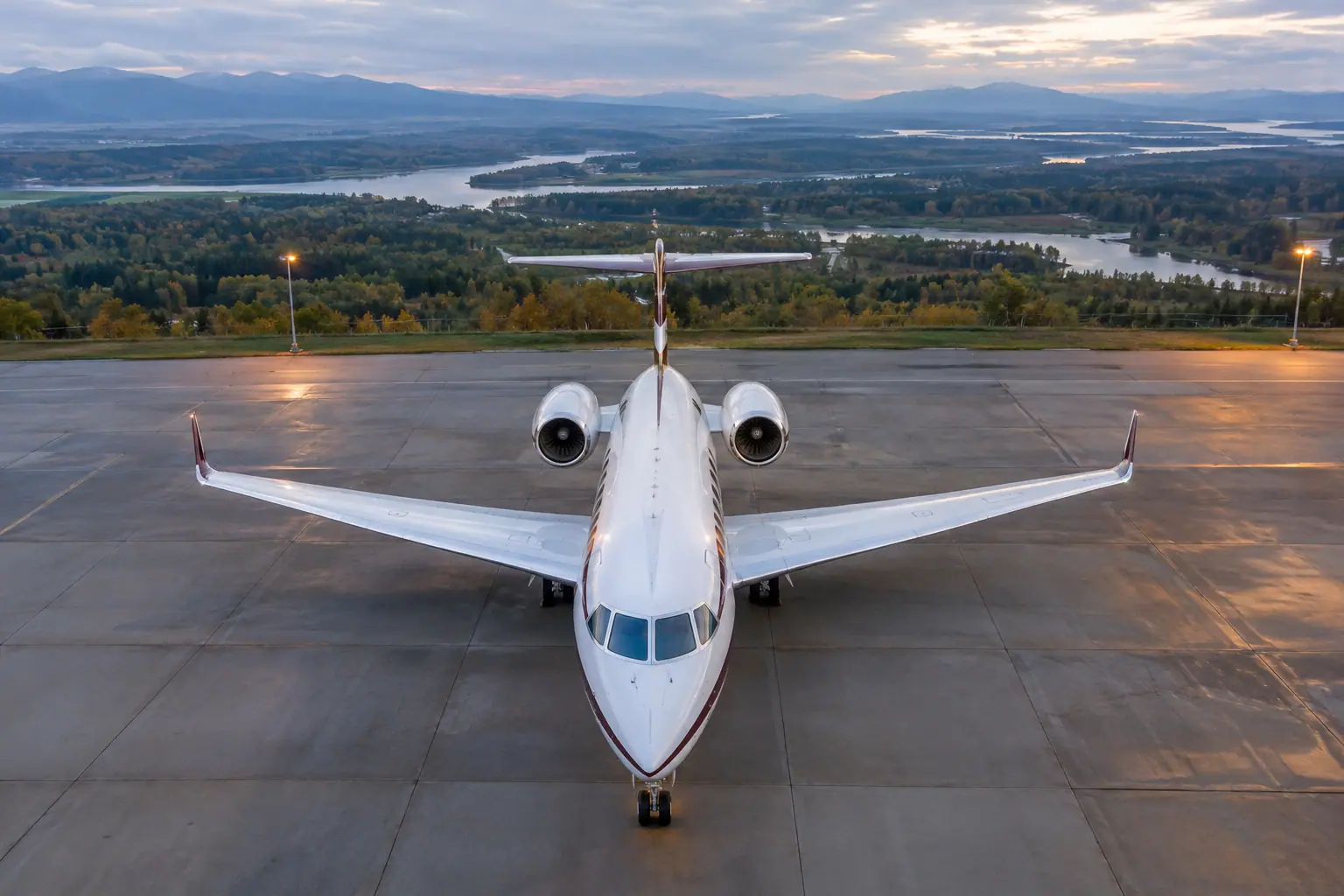
Cessna Citation X+
- 9 seats
- 527 kt cruise
- 3,460 nm range
The Cessna Citation X+ is a super-midsize jet cruising at 527 knots over 3,460 nautical miles with 9 seats. The X+ is the fastest airframe in this list, which shortens long coast-to-coast legs. Its 82 cubic feet of baggage is smaller than some rivals.
Bombardier Challenger 350
- 10 seats
- 470 kt cruise
- 3,200 nm range
The Bombardier Challenger 350 seats 10 at 470 knots with 3,200 nautical miles of range and a 6-foot cabin. With 106 cubic feet of baggage, the Challenger 350 handles a full party without a cargo compromise. It is a frequent choice for transcontinental nonstops.

Heavy jet
Heavy jets cost $9,500 to $14,500 per hour and carry 10 to 14 passengers with full baggage. A heavy jet flies around 470 knots with 4,000 nautical miles of range, making transcontinental and international legs practical. On a New York to Los Angeles run the cabin size and range are what you are paying for.
Dassault Falcon 900LX
- 12 seats
- 459 kt cruise
- 4,750 nm range
The Dassault Falcon 900LX is a heavy jet with 12 seats, 459 knots of cruise, and 4,750 nautical miles of range. The Falcon 900LX carries 127 cubic feet of baggage and opens international legs at heavy jet rates.
Gulfstream G450
- 14 seats
- 476 kt cruise
- 4,350 nm range
The Gulfstream G450 seats 14 at 476 knots with 4,350 nautical miles of range and a 45-foot 1-inch cabin. With 169 cubic feet of baggage, the G450 is the largest airframe here for groups and long trips.
How to choose an aircraft for the route
Start with the distance and the passenger count, then check the class against both. If the leg is under 1,400 nautical miles and the party is 6 or fewer, then a light jet or turboprop usually covers it at the lowest hourly rate; the Citation CJ4 Gen2 at 2,165 nautical miles of range will fly New York to Miami nonstop, while a HondaJet Elite II with 1,550 nautical miles is better suited to shorter hops.
Airport performance is the second check. High-elevation fields such as Centennial near Denver, at 5,885 feet, and summer heat at Harry Reid in Las Vegas, where the July density altitude reaches 5,800 feet, both cut into takeoff performance. If density altitude is high, then a super-midsize or heavy jet may be the safer and more economical choice for the leg. Ask the operator to confirm the numbers for your departure date, and note that flights are arranged through FAA Part 135 operators while brokers act as agents under DOT Part 295.
Inquiries
What are private jet rental prices by aircraft class?
Turboprops run $2,200 to $3,500 per hour, light jets $3,800 to $5,800, midsize jets $5,200 to $7,800, super-midsize jets $7,200 to $10,000, and heavy jets $9,500 to $14,500. These are 2026 estimates for the aircraft, crew, and fuel; landing fees, crew overnight costs, and positioning legs can add to the total, so compare quotes line by line.
What does a light jet trip cost on specific routes?
A light jet on Los Angeles to Las Vegas, 199 nautical miles and 47 minutes, runs about $4,000 to $6,000. New York to Miami, 949 nautical miles and 2 hours 37 minutes, is roughly $10,000 to $15,000. New York to Los Angeles, 2,129 nautical miles and 6 hours 15 minutes, is $23,500 to $36,000. Treat these as estimates; the exact figure depends on the aircraft, date, and one-way or round trip.
Does a turboprop cost less than a light jet?
Yes. Turboprops are priced at $2,200 to $3,500 per hour against $3,800 to $5,800 for light jets. On a 200-nautical-mile leg such as Dallas to Houston in 48 minutes, the difference is modest. On a 600-nautical-mile leg it becomes meaningful. Range and speed are lower, so weigh the savings against the extra time in the air.
How does aircraft choice change the price of a coast-to-coast flight?
A light jet on New York to Los Angeles, 2,129 nautical miles, is estimated at $23,500 to $36,000. A super-midsize with 3,200 nautical miles of range can fly it nonstop, and a heavy jet adds cabin size for 10 to 14 passengers. The hourly rate is higher, but you are buying nonstop capability and space rather than a fuel stop.
When should I book a heavy jet instead of a super-midsize?
When the party is 10 or more, the baggage is heavy, or the leg exceeds about 3,200 nautical miles. Heavy jets at $9,500 to $14,500 per hour carry 10 to 14 passengers with 4,000 nautical miles of range. For a smaller group on a domestic route, a super-midsize at $7,200 to $10,000 per hour usually does the job at a lower total.
What extra fees sit on top of the hourly rate?
Landing and handling fees, crew overnight costs, international fees where CBP processing applies, and any segment the operator must fly empty to reach your airport. The hourly band of $3,800 to $5,800 for a light jet covers the aircraft, crew, and fuel only. Ask for an all-in quote and confirm what is included before you compare one aircraft against another.