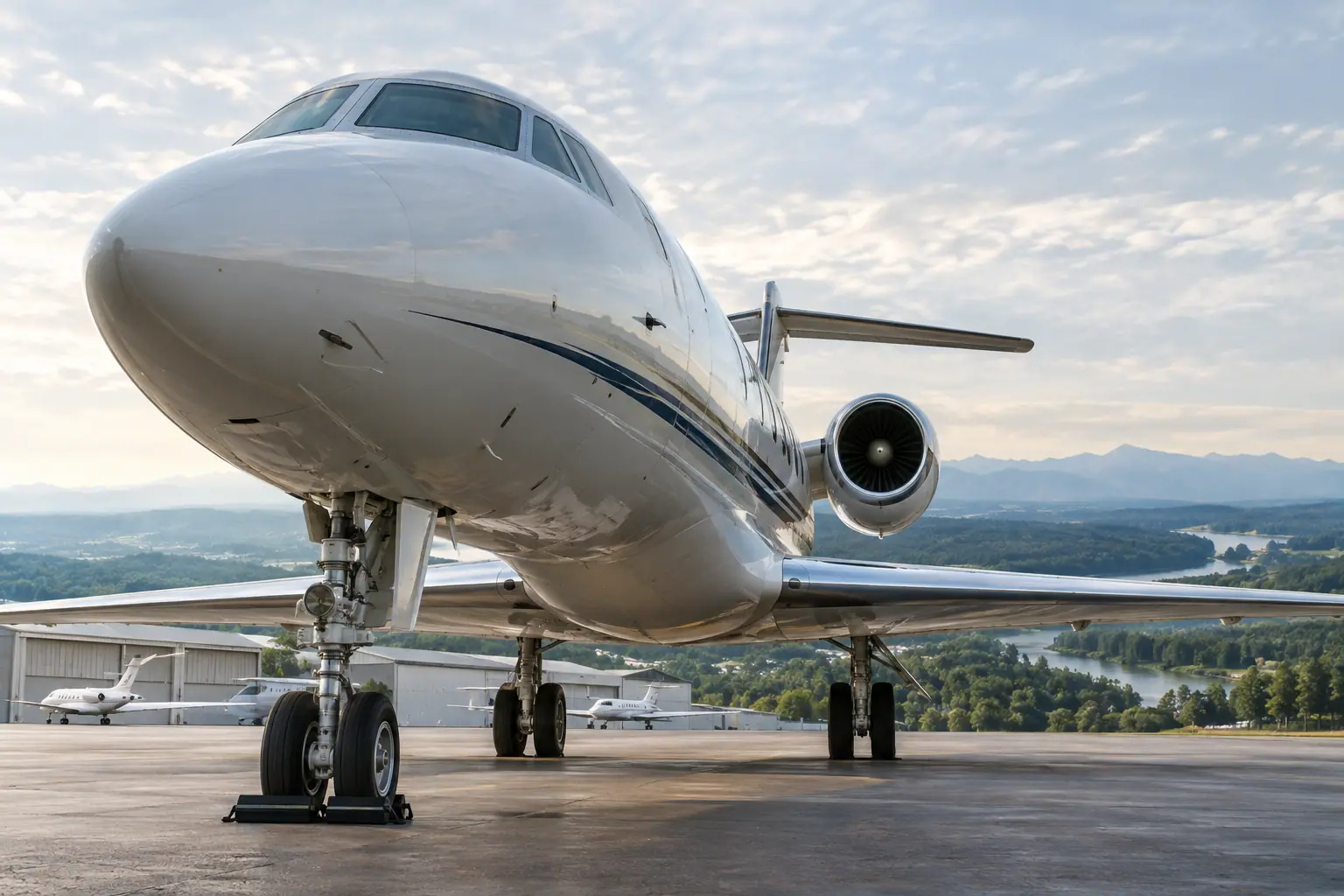
Private jet rental prices William P. Hobby
Private jet rental prices William P. Hobby start with the aircraft and mission. A midsize jet often runs $4,500 to $7,000 per flight hour. Here is how Houston shapes what you pay.
- KHOU · HOUIATA codes
- 46 ftairport altitude
- 7,602 ftlongest runway
- 0 mito New York
Private jet rental prices William P. Hobby reflect one of the few big-city airports where a 7,602-foot runway and a 46-foot field elevation let heavy jets and light turboprops share the same ramp. Hobby sits close to downtown Houston, so ground time is short and the airfield handles airline traffic alongside general aviation. That mix is why quotes here vary widely: the aircraft type, the trip length and the season all move the number. Charter brokers quote estimates, and operators holding FAA Part 135 authority run the flights under their own operational control.
Expect quotes from a few thousand dollars for a short turboprop hop to five figures for a transcontinental heavy jet. Hourly rates are the backbone of any estimate, but landing fees, fuel and crew duty time stack on top. A broker arranging your trip acts as your agent under DOT Part 295 rules, which means the operator, not the broker, is the party legally responsible for flying the aircraft. Most Houston charters fall between $4,500 and $7,000 per hour for a midsize jet.
Demand around Houston tracks the energy business, the Texas Medical Center and major events on the calendar. When a big convention or a playoff game lands, available aircraft tighten and pricing firms up. Booking a week or more ahead usually widens your options; calling the day before leaves you with whatever is parked nearby. The routes that move most often from Hobby run to Dallas, Austin and the Gulf Coast.
Hobby runway length and elevation
Private jet rental prices William P. Hobby are shaped by a 7,602-foot runway at 46 feet elevation, enough for most midsize and large-cabin jets at full passenger loads on typical Texas days. Short-field turboprops use the same field without strain. A 7,602-foot runway at 46 feet of elevation covers nearly every charter category serving Houston. Runway choice matters less than weight and temperature on a hot afternoon, so operators plan fuel and passenger loads around the day's density altitude rather than the calendar.
| Runway | Size | Width | Surface |
|---|---|---|---|
| 04/22 | 7,602 ft | 150 ft | Concrete |
| 13R/31L | 7,602 ft | 150 ft | Asphalt |
| 13L/31R | 5,148 ft | 100 ft | Concrete |
Ground handling at Hobby
Six FBOs serve general aviation at Hobby: Wilson Air Center, Million Air Houston, Jet Aviation Houston, Atlantic Aviation, Signature Aviation and Henriksen Jet Center. Each handles fueling, catering and lounge access, and your operator picks the one tied to its own arrangements. Six FBOs at William P. Hobby means competitive ground handling and short taxi times to the ramp.
Ground handling fees land in your quote, and they vary by FBO and aircraft weight. If your schedule is tight, ask which FBO your operator uses so your car service meets you at the right building. When an international leg is involved, the crew files with CBP and clears customs at the designated facility, so build that time into the plan.
What Hobby is best for
- Business travel to downtown Houston and the Energy Corridor, with short drives from the ramp
- Turboprop and light jet hops to Dallas, Austin and San Antonio at lower hourly rates
- Midsize and large-cabin trips to the East Coast, Chicago and Colorado
- Event weekends when commercial seats tighten and a charter protects your schedule
| Class | Runway required | Here |
|---|---|---|
| Turboprop | 3,300 ft+ | Fits |
| Light jet | 4,000 ft+ | Fits |
| Midsize jet | 5,000 ft+ | Fits |
| Super-midsize jet | 5,200 ft+ | Fits |
| Heavy jet | 5,600 ft+ | Fits |
Heat and density altitude by season
Summer is the pricing wildcard at Hobby: July density altitude averages about 1,800 feet, and a 115-degree day pushes it to roughly 2,300 feet. Warm, humid air thins the margin for a fully loaded jet, so operators may cap passengers or fuel on the hottest afternoons. July density altitude near 1,800 feet can trim payload on smaller jets departing Houston. Winter runs the other way, with January density altitude around minus 1,200 feet and highs near 40F, which favors performance and often the price.
Wet days cluster through the year, with July and April the busiest at 13 and 12 days respectively. Spring and fall bring moderate highs in the 60s and 70s and density altitude between 100 and 800 feet, a comfortable window for almost any aircraft type. When you fly in peak summer, plan around morning departures to dodge the worst heat and the payload penalties that come with it.
| Monthly | Avg high | Wet days | Alt. density |
|---|---|---|---|
| Jan | 40°F | 9 | -1,200 ft |
| Feb | 43°F | 11 | -1,000 ft |
| Mar | 49°F | 10 | -600 ft |
| Apr | 60°F | 12 | 100 ft |
| May | 70°F | 11 | 800 ft |
| Jun | 79°F | 11 | 1,400 ft |
| Jul | 85°F | 13 | 1,800 ft |
| Aug | 83°F | 12 | 1,700 ft |
| Sep | 77°F | 10 | 1,300 ft |
| Oct | 66°F | 9 | 500 ft |
| Nov | 54°F | 9 | -300 ft |
| Dec | 45°F | 11 | -900 ft |
Getting to and from the airport
Hobby sits minutes from I-45 and the Sam Houston Tollway, putting downtown Houston and the Texas Medical Center within a short drive. Ride-share and black-car service reach every FBO, and the airline terminal is separate from the general aviation side. Hobby's close-in location cuts ground time compared with Houston's outlying fields. When your trip crosses a border, the operator coordinates CBP clearance in advance, and TSA screening applies only where your FBO and operator require it.
Private jet routes via William P. Hobby
Across these 6 private jet routes, distance spans 199 to 2,129 nautical miles; one-way light jet estimates range from $4,000 to $36,000.



Inquiries on this airfield
How much are private jet rental prices William P. Hobby for a midsize jet?
A midsize jet typically prices between $4,500 and $7,000 per flight hour, and a two-hour hop to Dallas lands near the low end of that band. The estimate covers aircraft, crew and fuel, with landing and handling fees added. Every figure is an estimate, so ask for the full breakdown before you commit.
Does Hobby's 7,602-foot runway limit which jets can fly here?
No. The 7,602-foot runway at 46 feet of elevation accommodates light turboprops through large-cabin jets on typical days. The real constraint is summer heat, when density altitude near 1,800 feet in July can reduce payload on smaller aircraft. Operators adjust fuel and passenger counts rather than declining the trip.
When is the cheapest season to charter from Houston?
Winter generally offers the best performance and softer demand, with January density altitude around minus 1,200 feet and highs near 40F. Fall and spring sit in a moderate range between 100 and 800 feet. Summer's heat and event traffic push both payload limits and pricing higher, so book early if you must fly in July.
Which FBOs handle private jets at William P. Hobby?
Six FBOs serve the field: Wilson Air Center, Million Air Houston, Jet Aviation Houston, Atlantic Aviation, Signature Aviation and Henriksen Jet Center. Your operator chooses the one tied to its own arrangements. Ask which FBO your flight uses so ground transport meets you at the right building and handling fees are clear.
Who is legally responsible for my charter flight?
The operator is. Flights are flown by companies holding FAA Part 135 authority, and those operators hold operational control and responsibility for the aircraft and crew. A broker arranging the trip acts as your agent under DOT Part 295. That distinction matters if anything goes wrong, so confirm the operator's name before you sign.
How far in advance should I book a Houston charter?
A week or more gives you the widest aircraft choice, especially around conventions and game weekends when Houston demand spikes. Last-minute requests leave you with whatever is parked nearby, and pricing reflects that scarcity. For summer departures, morning slots also help you avoid the payload penalties that come with peak afternoon heat.